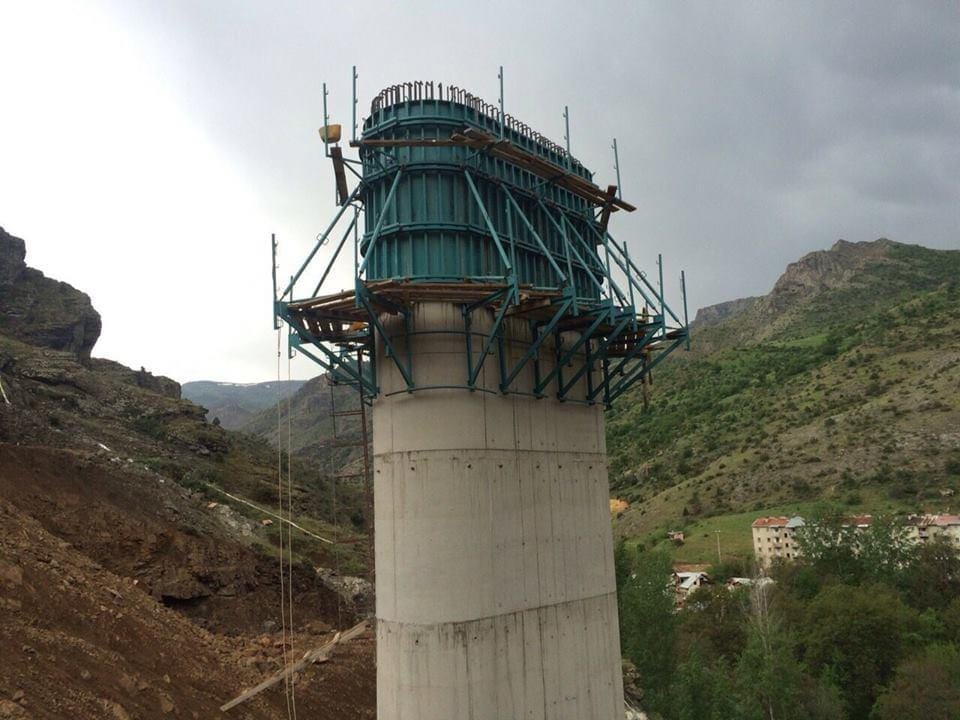
Formwork and shoring are temporary structures on a construction site — yet they carry the weight of permanent ones. That perception of temporariness is the source of the most common mistakes. Below are the seven risks we see most often, with the corresponding precaution.
1. Early stripping
Removing formwork before the concrete has reached adequate strength is one of the most serious risks. Stripping time must be determined by concrete strength, not by the calendar. Strength depends on concrete class, ambient temperature, cement type and element span. The decision must be made jointly by the site manager and the structural engineer of record.
2. Missing bracing and horizontal ties
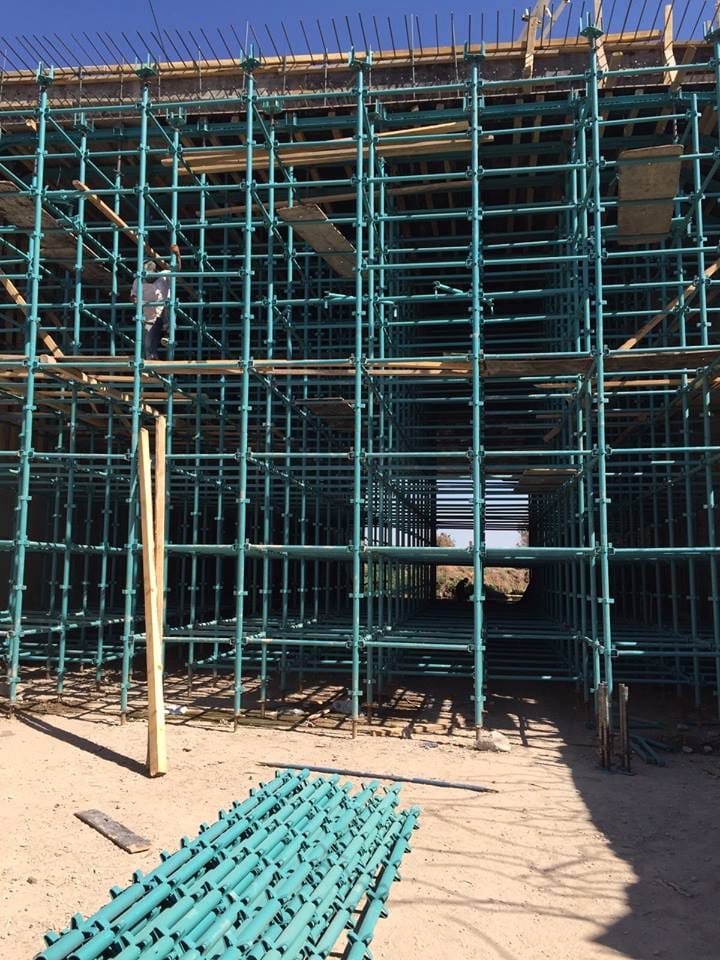
In shoring towers, bracing members are not "extras"; they provide the lateral stability of the system. Omitting a single brace can markedly reduce the tower's buckling capacity. Erection must follow the manufacturer's diagram exactly.
3. Ground bearing capacity not checked
However strong the shoring, if the ground beneath cannot carry the load the system settles and loses stability. On fill ground, in areas softened by rain and in regions subject to freeze-thaw cycles, base plates and load-spreading timbers are mandatory.
4. Inadequate fall protection
Edge protection guardrails complete the working platform. Guardrail, mid-rail and toe board must all be present. For work at height a harness anchor point must be defined and accessible — if there is nowhere to clip on, the system has been designed incompletely.
5. Overloading and stockpiling
Stockpiling material on a freshly cast slab is among the most frequent omissions. The slab's capacity is limited by the concrete's current strength. A bundle of rebar, a pallet of blocks or a stack of formwork placed at one point creates a concentrated load never anticipated in design.
6. Uncontrolled modification
"Small" changes made on site to get around an obstruction — removing a prop, taking out a brace, extending a platform — take the system outside its design. Any modification must be approved by the engineer who designed the system.
7. Uncontrolled use of equipment
- Introducing damaged, bent or cracked components into the system
- Mixing incompatible parts from different manufacturers
- Skipping periodic inspection of lifting hooks and slings
- Exceeding crane capacity
Safety that comes from design
The most effective measure is a design that does not leave safety to the user. If the formwork arrives with the platform already fitted, the guardrail connection defined and the anchor points marked, then correct behaviour on site becomes the easiest behaviour. At Acer we treat this equipment as part of the design, not as an accessory added afterwards.