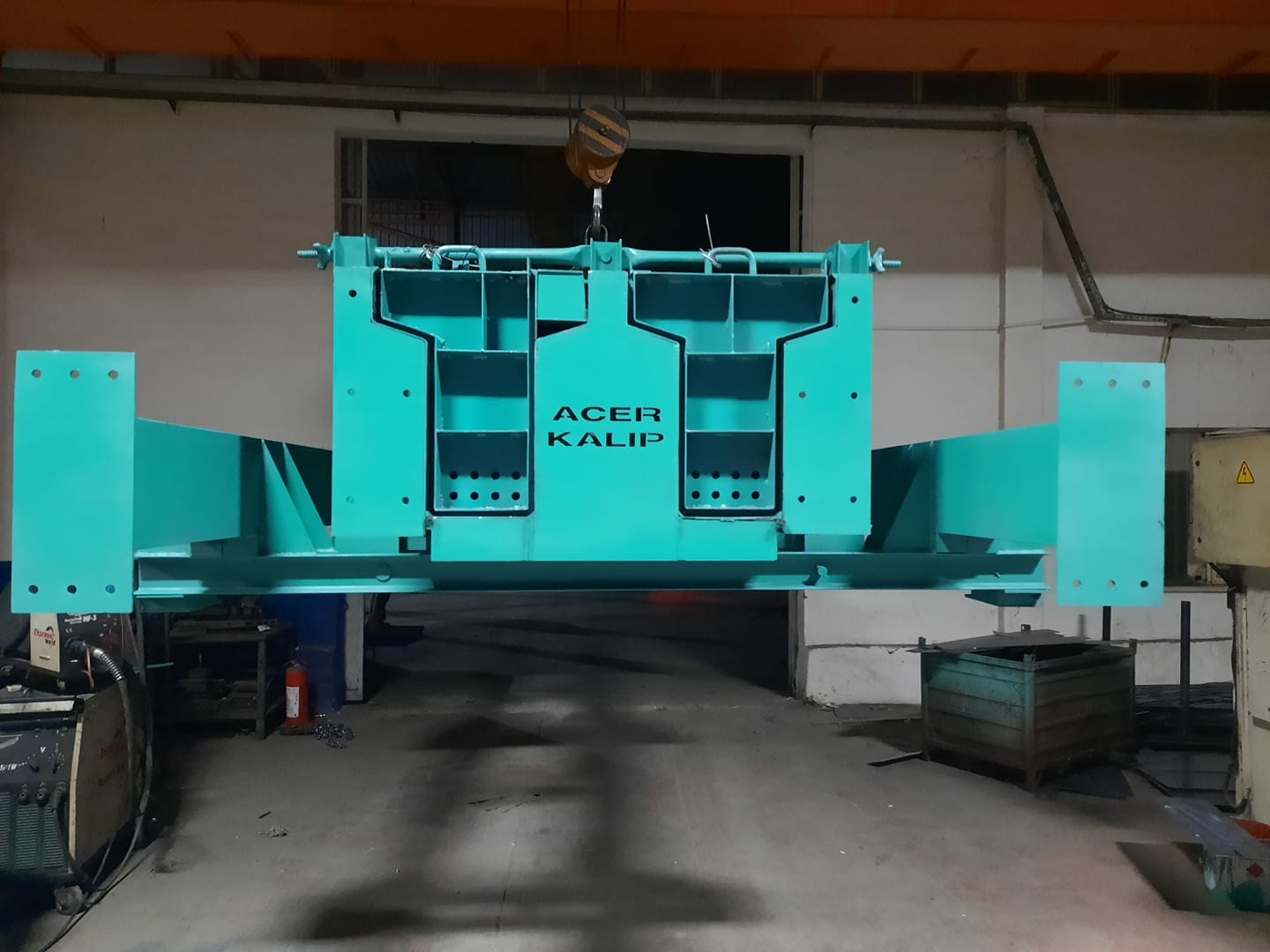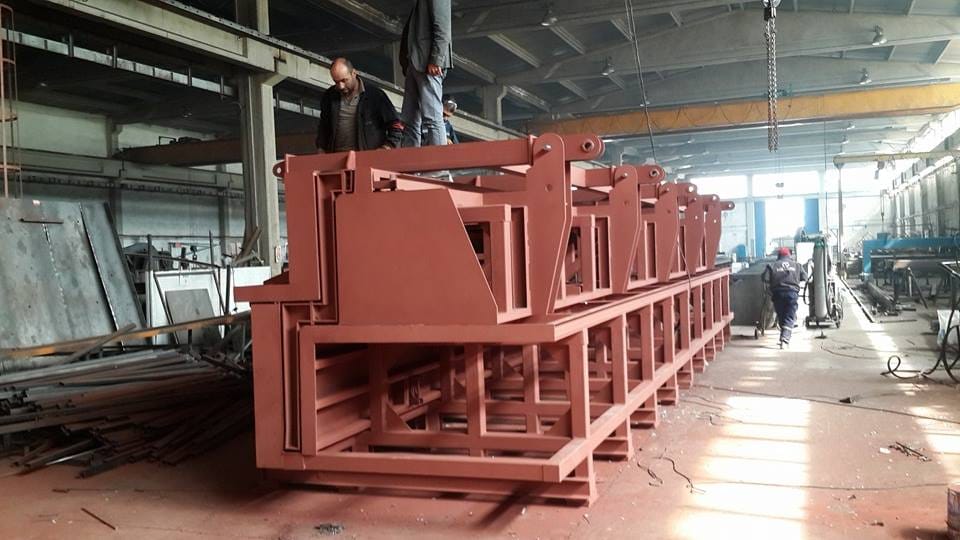
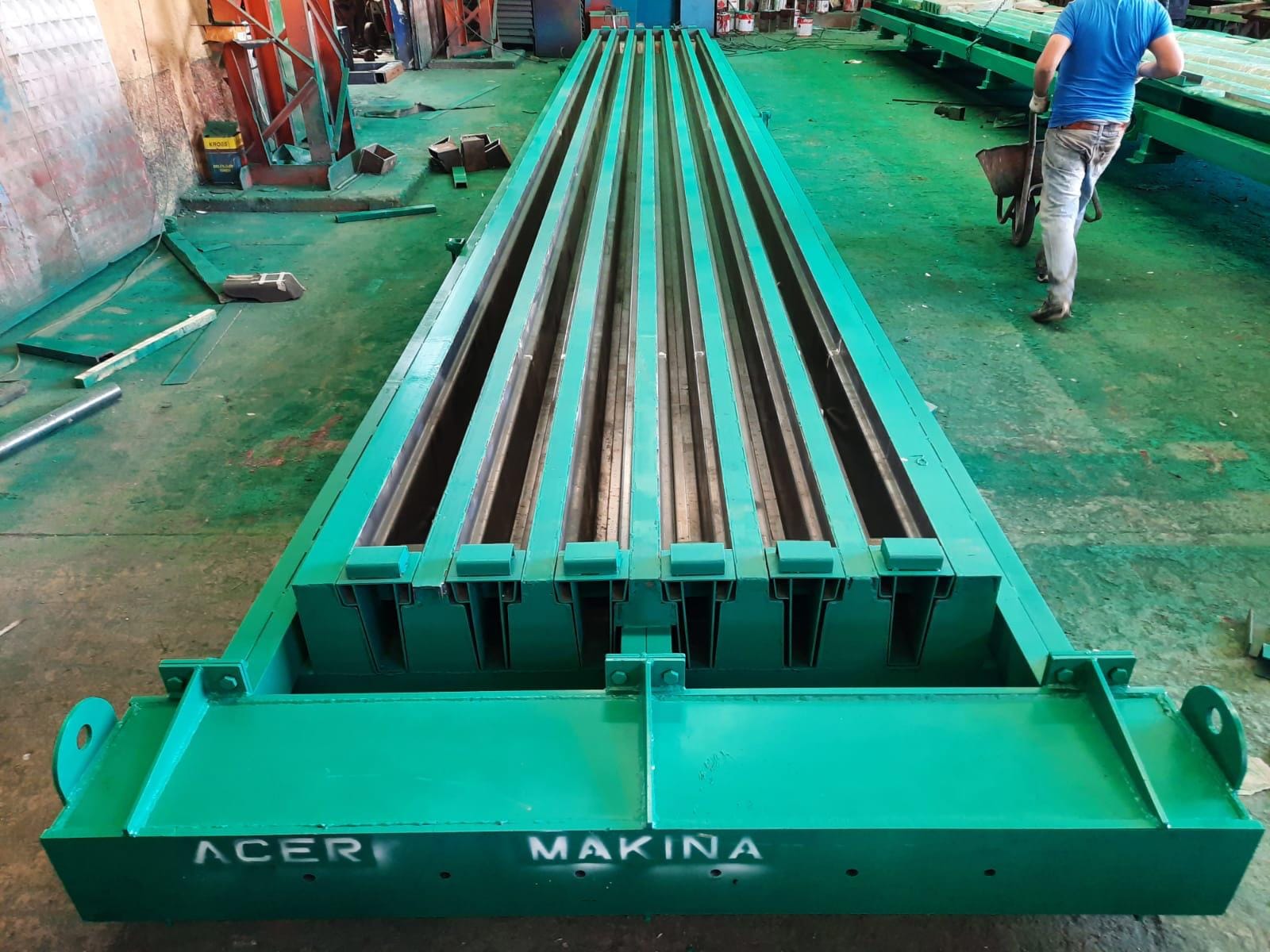
In cast-in-place concrete a small deviation can be covered with render. In precast production there is no such margin: the element is made in the factory and must fit on site. Deviation in the mould accumulates during erection.
Where is tolerance lost?
Welding distortion
This is the most common source. Heat during welding causes expansion and subsequent shrinkage on cooling. Without a planned weld sequence the frame loses its dimensions. The remedy is a symmetrical, sequenced welding plan and, where necessary, post-weld stress relief.
Insufficient rigidity
If the mould frame is weak enough to deflect under concrete pressure, dimensions change on every pour. This will not show up during dimensional inspection of an empty mould — only under load. Deflection limits matter as much as strength in mould calculations.
Wear and impact
Moulds wear over time and take knocks in use. End stops and locking mechanisms wear fastest. A mould that is never dimensionally checked will keep producing without revealing where it has drifted out of tolerance.
Surface defects and their causes
| Defect | Likely cause | Remedy |
|---|---|---|
| Surface blowholes | Insufficient vibration, excess release agent | Standardise vibration time and release agent quantity |
| Joint marks / flashing | Leaking mould joint | Joint seal, closer fixings, machined joint faces |
| Colour variation | Different release agents, different curing | Single release agent type, controlled curing |
| Rust staining | Corrosion of the forming face | Renew surface treatment, clean after use |
| Edge spalling | Harsh stripping, sharp corner detail | Chamfer detail, controlled release mechanism |
What mould design can prevent
- A one-piece frame design that minimises the number of joints
- Watertight joint detailing with seal recesses
- Mounting points that position surface vibrators correctly
- Fixed positioning jigs for cast-in items and lifting anchors
- Chamfered edge detail to prevent corner spalling
- Fast, controlled release mechanisms that remove the need for harsh stripping
Maintenance discipline
Even the best mould drifts out of tolerance without maintenance. Cleaning after every pour, regular dimensional checks and periodic renewal of the surface treatment are the only way a mould keeps its day-one performance.
If you need mould refurbishment or new moulds for your precast line, we can work from the dimensions of your existing line.