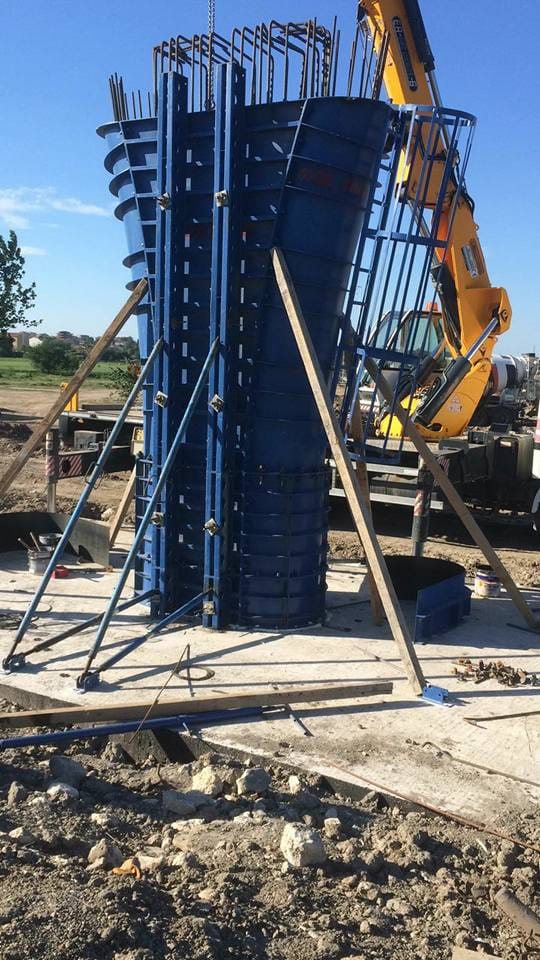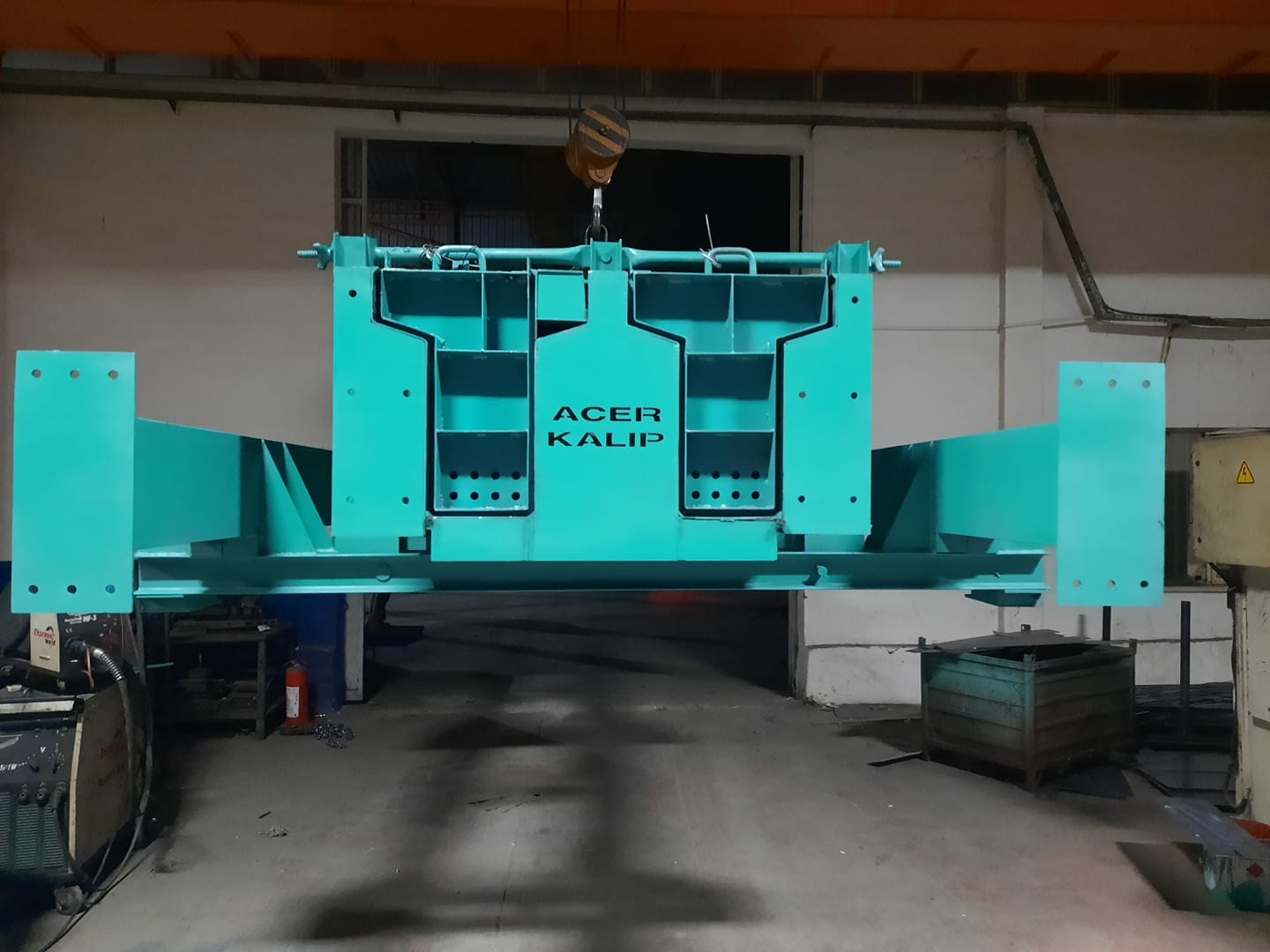
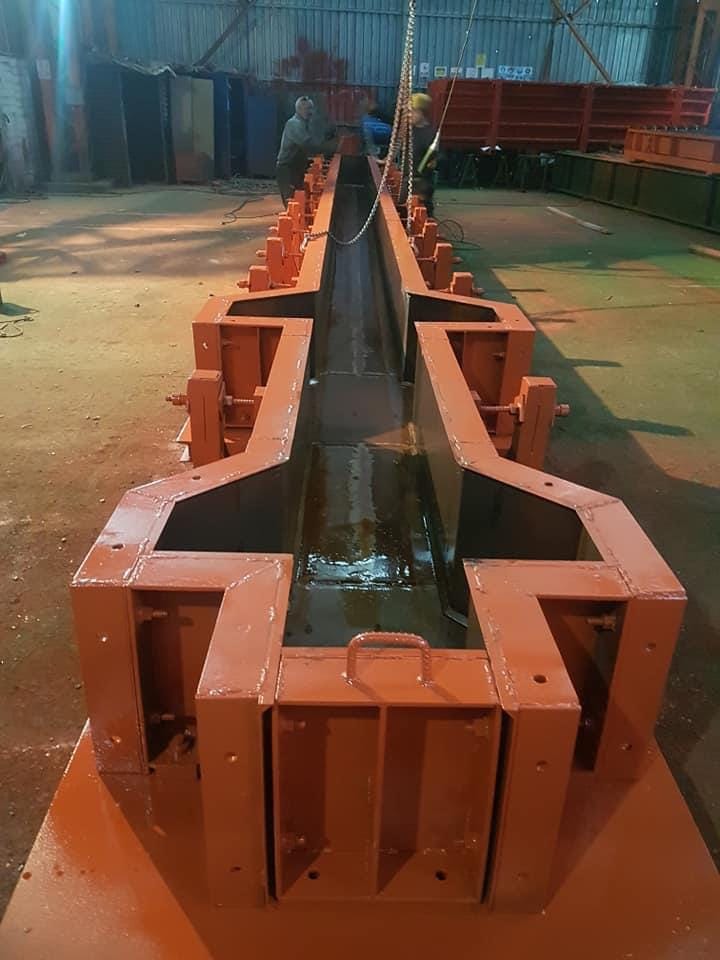
Of two moulds off the same production line, one may hold its dimensions after hundreds of pours while the other becomes unusable within a year. The difference is almost entirely maintenance discipline.
1. Clean after every pour
Concrete residue left on the forming face transfers as a mark on the next pour and hardens over time until it can barely be removed. Cleaning must happen before the concrete has fully set.
- Use plastic or soft metal scrapers; sharp tools scratch the face
- A scratched face holds more residue on subsequent pours — a vicious circle
- Check corners and joints in particular; residue collects there first
2. Use release agent correctly
Release agent eases stripping and protects the face. But too much is harmful: a thick application causes blowholes and colour variation.
- Apply as a thin, even film; leave no pooling
- Wipe off the excess with a clean cloth after application
- Do not switch release agent types frequently — this is a leading cause of colour variation
- Use an approved product for potable water structures
3. Stop corrosion early
Corrosion in steel formwork usually starts where the coating is damaged and spreads. Rust on the face transfers to the concrete surface as staining.
- Touch up coating damage where you see it; don't wait for end of season
- Apply a protective oil film to moulds that will be idle for a long time
- Renew the surface treatment periodically
4. Store correctly
- Do not place moulds directly on the ground; store on blocks, clear of the surface
- Position at an angle or upright so water cannot collect
- When stacking, never let a forming face rest on another mould's corner
- Do not leave mechanisms and locks in the open position — they deform
5. Periodic dimensional checks
A mould drifts out of tolerance gradually, and this goes unnoticed until it shows in the elements produced. At defined intervals — particularly on precast lines — critical mould dimensions should be measured and recorded. Caught early, a drift is easy to correct.
6. Take mechanical damage seriously
Knocks during crane handling can initiate cracks in weld seams. Lifting hooks and connection points in particular should be visually inspected regularly. Any crack found must be repaired before it propagates.
Repair or replace?
One of steel formwork's great advantages is that it can be repaired. A deformed section can be cut out and replaced; a worn face can be renewed. Considering repair before deciding on replacement is usually the better choice both economically and environmentally. Contact us for refurbishment of your existing moulds.