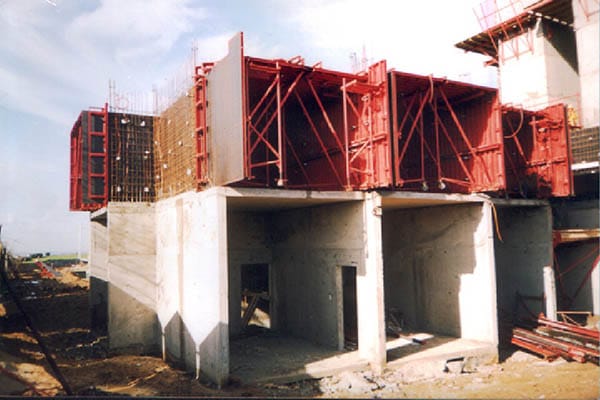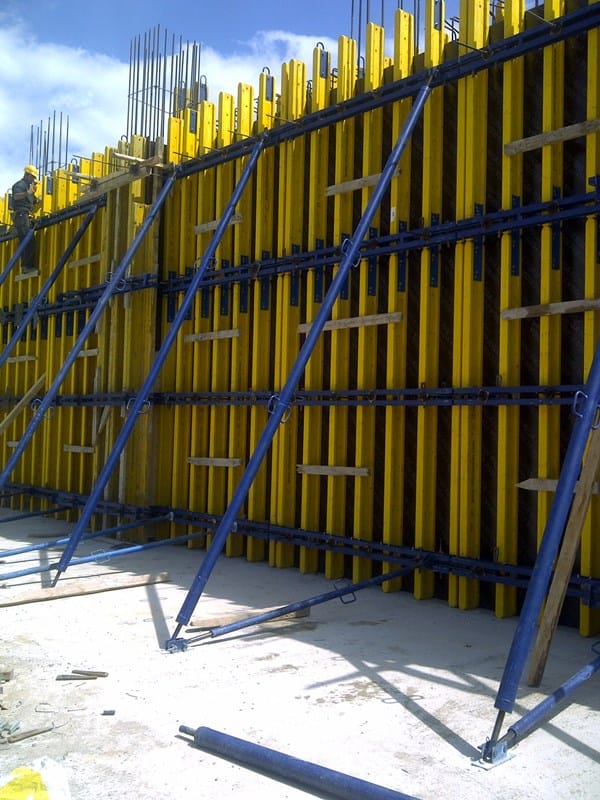
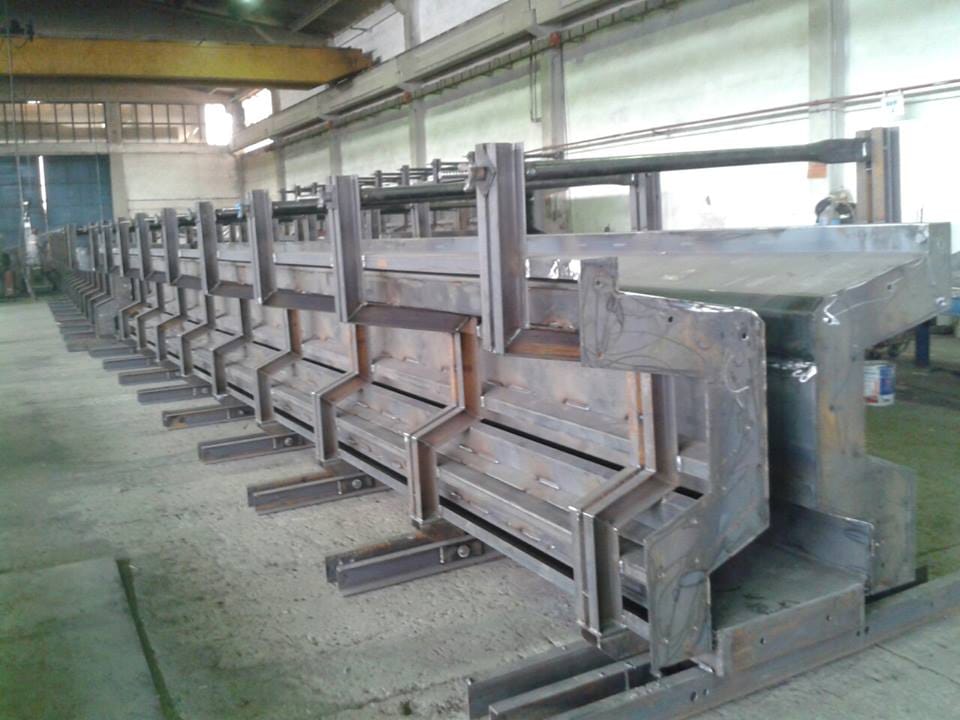
"Steel formwork is expensive" is true but incomplete. Measuring formwork cost by purchase price alone is like judging a vehicle by its sticker price. The right metric is the total cost of forming one square metre of concrete.
How is unit cost calculated?
The simple approach: divide the total cost of ownership (purchase + maintenance + repair) by the total square metres the formwork will form over its life. To that you must add the labour spent on every pour.
| Criterion | Timber / Plywood | Steel |
|---|---|---|
| Initial investment | Low | High |
| Reuse count | Limited (tens of pours) | Very high (hundreds of pours) |
| Surface quality | Degrades with use | Maintained with care |
| Dimensional stability | Affected by moisture | High |
| Repairability | Limited | Repairable by welding |
| Weight / handling | Manually handled | Usually requires a crane |
| Scrap value | Negligible | Retains steel scrap value |
When is timber the right choice?
It would be wrong to dismiss timber formwork. It remains the most sensible solution in these situations:
- One-off or rarely repeated bespoke geometries
- Small-scale sites without a crane
- Complex details that must be shaped by hand
- Short-duration, low-budget work
When does steel pay off?
- Work where the same element repeats many times — mass housing, precast production
- Projects requiring fair-faced concrete where surface quality is critical
- Long-running sites where the formwork can be amortised over its life
- Deep, narrow sections where concrete pressure is high
The overlooked item: labour
Comparisons usually focus on material price and skip labour. Yet with timber formwork, stripping, cleaning, replacing damaged parts and re-erecting repeat after every pour. With steel that cycle is far shorter and standardised. On long-running sites the difference in total labour can easily exceed the difference in material.
A hybrid approach
In practice most sites use both: steel for repetitive primary elements, timber for one-off and complex details. This keeps the investment reasonable while preserving flexibility. The right mix is determined by looking at the project's element distribution.
Conclusion
The answer depends on the project. Before deciding, clarify three things: how many times will you cast the same element, how critical is surface quality, and is there a crane on site? Those three answers largely determine the choice.