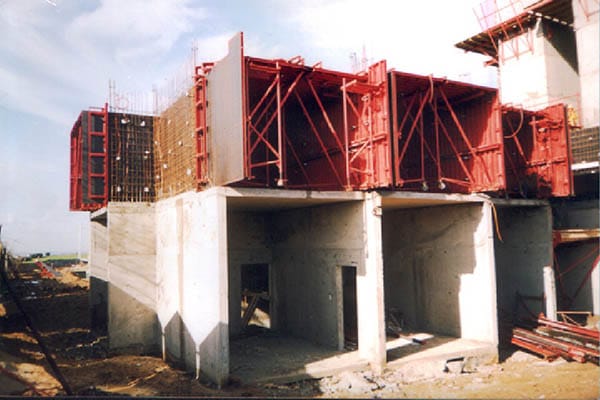
Tunnel formwork is a half-tunnel shaped steel system that allows a shear wall and a slab to be cast together in a single concrete pour. It is frequently chosen in residential projects because it shortens construction time — but it is not the right choice for every project.
How does the system work?
Two L-shaped half-tunnels are positioned facing each other to form a room volume. The horizontal leg forms the slab, the vertical leg forms the wall. After reinforcement is placed, concrete is poured in a single operation. The next day, once the concrete has reached sufficient strength, the formwork is pulled out by crane and moved to the next axis.
When planned correctly this cycle establishes a regular rhythm per floor. With the right combination of formwork sets, crane capacity and labour, a daily casting cycle becomes possible.
Key advantages
- Monolithic structure: No cold joint forms between wall and slab. Because the connection is created during the pour, the structure behaves as a whole — which contributes directly to seismic performance.
- Render-free surface: A steel forming face gives a smooth concrete surface. Largely eliminating the rough rendering stage saves both labour and time.
- Speed: On repetitive layouts, the time per floor drops significantly.
- Predictable labour: Because the system is standardised, the crew performs the same task in the same time on every floor, which simplifies planning.
Three criteria for the decision
1. Repetition count
Tunnel formwork is an investment, and its return depends on how many times the same formwork will be used. On low-rise, single-block projects or where the floor plan changes on every level, the system may not be economical. Where the same type repeats many times — mass housing, hotels, dormitories — the balance clearly favours tunnel formwork.
2. Crane capacity
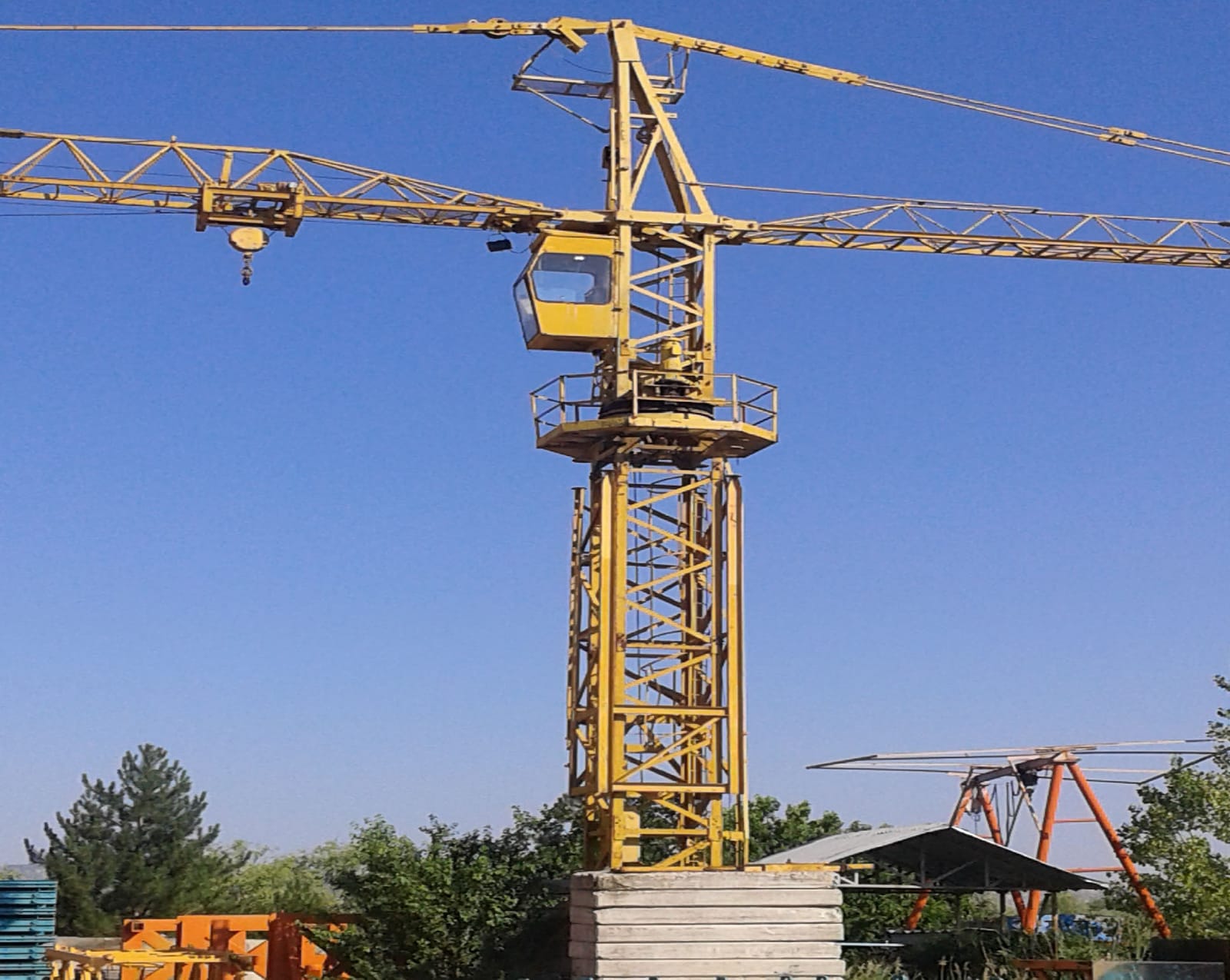
Tunnel formwork does not work without a crane. The weight and size of the formwork set must not exceed the crane's lifting capacity at the relevant radius. Formwork dimensioning and crane selection must therefore be decided together. Capacity shortfalls discovered later mean formwork that has arrived on site cannot be used.
3. Site layout
An area is needed where stripped formwork can be set down, cleaned and oiled. On tight plots, failing to plan this area is one of the most common causes of a blocked cycle.
Common mistakes
- Uneven release agent application — causes staining and difficult stripping
- Reusing formwork without cleaning — residual concrete permanently degrades surface quality
- Early stripping — removing formwork before the concrete has gained strength can cause structural damage
- Too few formwork sets for the target pour rate — the crew waits and the cycle stretches
In summary
Tunnel formwork is a powerful system that reduces both time and total cost on projects with repetitive floor plans. But a decision taken without evaluating crane, site layout and repetition count together will not deliver the expected benefit. If you would like to assess your project against these three criteria, our engineering team is available.